
The Struggle Between Law and Mercy
Les MisérablesThis thread examines how legal judgment repeatedly collides with conscience, from the original punishment of Jean Valjean to Javert’s final crisis.
increasing Bearing strength in each event
 decreasing
Bearing strength in each eventdecreasingPunishment Without Proportion
Punishment Without Proportion
Hunger becomes a crime
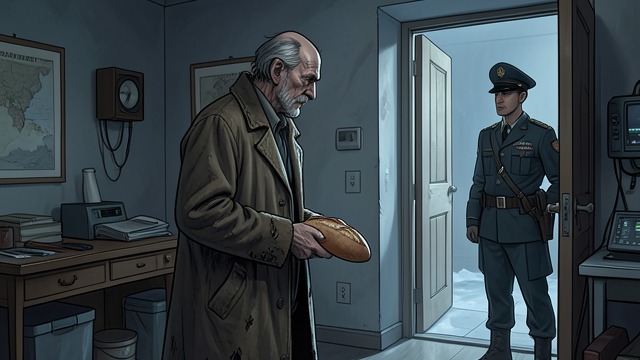
Jean Valjean steals a loaf of bread because his sister’s children have no food. The legal process treats the act as a serious offense and sends him to the galleys.
His sentence grows after failed escape attempts, extending a short act of survival into nineteen years of punishment. The penalty reshapes his identity and prospects.
Society’s part in the harm
Hugo’s account asks readers to consider not only the theft but the conditions that made it desperate. The punishment does not restore the family or teach Valjean how to rejoin society.
Instead, imprisonment and exclusion make bitterness more likely. The law’s claim to order becomes morally uncertain when its response deepens the original misery.
A Passport That Condemns
A Passport That Condemns
Freedom under supervision
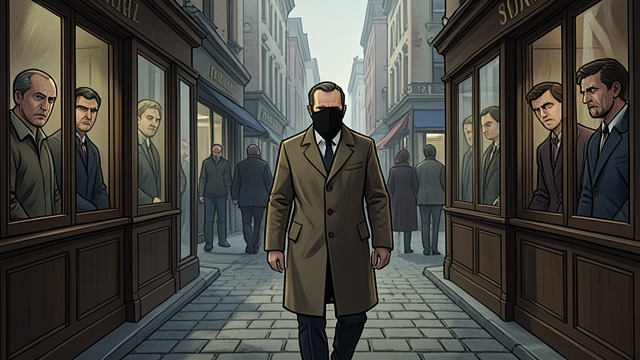
Jean Valjean leaves the galleys with a yellow passport and rules that make him identifiable wherever he travels. His sentence has ended, but society continues to treat him as a suspect.
Hotels and officials reject him, leaving a released man with little legal means of earning acceptance. The supposedly completed punishment becomes permanent exclusion.
A path back to crime
Valjean’s isolation makes hostility seem like the only honest response to a hostile world. The system designed to prevent wrongdoing instead helps create conditions for its return.
The novel makes reintegration a public responsibility, not simply a private test of character. A person cannot easily become lawful when every door is closed.
The Innocent on Trial
The Innocent on Trial
Mistaken identity as state violence
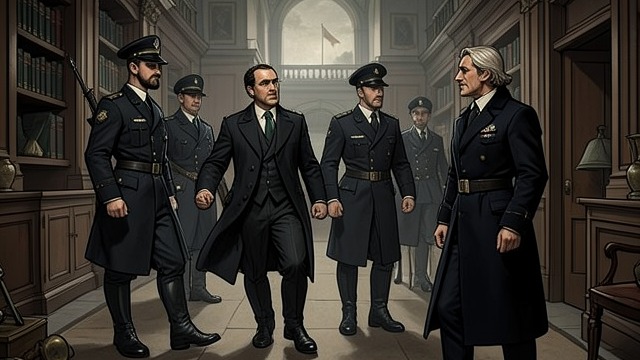
The authorities identify Champmathieu as Jean Valjean and prepare to punish him for a crime he did not commit. Officials and witnesses make the identification seem conclusive.
The danger lies not only in one mistaken judgment but in a process that can turn error into an accepted fact. An innocent man’s future depends on whether the real Valjean will speak.
Conscience interrupts procedure
Jean Valjean reveals himself and is willing to lose his freedom rather than let Champmathieu suffer in his place. The court releases the innocent man.
The episode contrasts legal authority with moral responsibility. Justice requires more than applying procedure; it requires people to confront the harm that procedure can produce.
The Law’s Human Cost
The Law’s Human Cost
Arrest over compassion
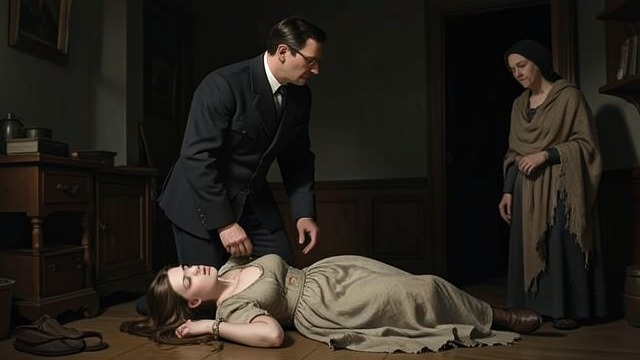
Inspector Javert arrests Jean Valjean while Fantine is dying and refuses Valjean’s request to find her child. The officer follows the legal claim on Valjean without weighing the immediate human need.
Fantine dies after believing that Cosette has not arrived. The sequence makes the cost of inflexible enforcement visible in a private room.
More than an individual failure
Javert sees himself as serving justice, but the consequences expose how little the system can protect someone like Fantine. Valjean’s later rescue of Cosette repairs only part of the damage.
The scene makes mercy a question of institutional values as well as personal kindness. A law that cannot recognize vulnerability risks becoming another source of harm.
When the Officer Breaks
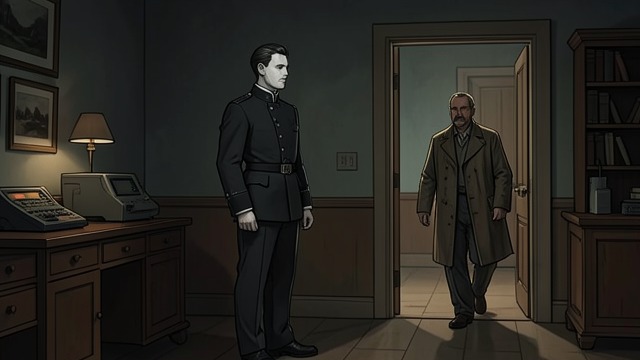
When the Officer Breaks
A contradiction lived out
Javert has spent his life believing that a criminal cannot be morally good and an officer must enforce the law. Jean Valjean’s actions make both beliefs difficult to maintain.
Valjean spares Javert at the barricade, and Javert later lets Valjean go while he carries Marius. The officer’s own acts no longer fit his stated principles.
Justice beyond categories
Javert cannot accept that compassion might carry an authority higher than legal obedience. He sees only two equally intolerable paths and ends his life in the river.
His crisis shows the limits of a moral system that allows no revision. The novel does not dismiss law, but insists that justice without humane judgment can become destructive.
1795, after the theft at Faverolles
October 1815, on Jean Valjean’s release
1823, during the Champmathieu affair
1823, at Fantine’s death
June 7, 1832, at the Seine
